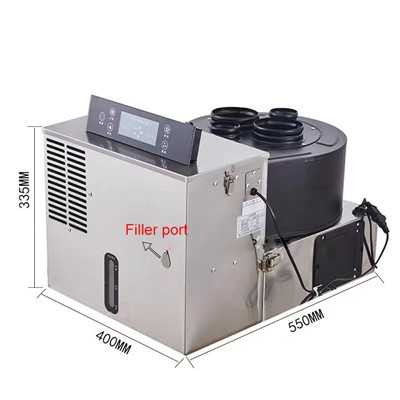


What types of data can a Table Slicer filter?
As a trusted Table Slicer supplier, I'm often asked about the diverse types of data that our Table Slicers can effectively filter. In this blog, I'll delve into the various data categories and illustrate how our products can play a crucial role in data management and analysis.
Quantitative Data
Quantitative data consists of numerical values that can be measured and counted. Examples include sales figures, temperatures, ages, and quantities of products in stock. Our Table Slicers are highly proficient in filtering this type of data.
For instance, if you're working with a sales dataset that contains information about daily sales volume across different stores. You can use our Table Slicer to filter the data based on specific sales ranges. Maybe you only want to view the stores where the daily sales are between $1000 and $2000. By setting the appropriate numerical boundaries in our Table Slicer, you can quickly isolate and analyze the relevant data.
Another scenario could be in a scientific research setting. Suppose you have a dataset of temperature readings from various sensors over a period of time. You can use our Table Slicer to filter the data for specific temperature intervals, such as all readings between 20°C and 30°C. This helps in focusing on the data that is relevant to your research hypothesis and can lead to more accurate conclusions.
Categorical Data
Categorical data represents characteristics or qualities that can be divided into groups or categories. This can include things like product categories, gender, geographical regions, and types of services. Our Table Slicer is well - equipped to handle categorical data filtering.
Take an e - commerce business as an example. The dataset may contain information about different products sold, categorized into electronics, clothing, home appliances, etc. You can use our Table Slicer to filter the data and only view the sales data for a particular product category, say electronics. This allows you to analyze the performance of a specific segment of your business and make informed decisions, such as adjusting inventory levels or marketing strategies for that category.
Geographical data is also a form of categorical data. If you have a sales dataset that includes information about customers from different cities or countries, our Table Slicer can be used to filter the data based on a specific geographical area. For example, you can focus on the sales data from customers in the United States to understand the market trends and customer behavior in that region.
Temporal Data
Temporal data is related to time, such as dates, times, and durations. Our Table Slicer has excellent capabilities for filtering temporal data.
In a financial analysis, you may have a dataset of daily stock prices over several years. You can use our Table Slicer to filter the data for a specific time period, like a particular month or year. This enables you to analyze the stock performance during a specific time frame and compare it with other periods.
For a project management company, a dataset might contain information about project start and end dates, as well as the duration of each project. Our Table Slicer can be used to filter projects based on their start dates, end dates, or the length of the project. For example, you can focus on projects that started in the last quarter of the year or projects that lasted more than six months.
Hierarchical Data
Hierarchical data is structured in a tree - like fashion, with parent - child relationships between different data elements. Examples include organizational structures, product hierarchies, and geographical hierarchies.
In a large corporate setting, the organizational structure can be represented as hierarchical data, with departments, sub - departments, and employees. Our Table Slicer can be used to filter this data at different levels of the hierarchy. For example, you can filter the data to view all employees within a specific department or within a specific sub - department under that main department.
In a product hierarchy, a company may have broad product categories, sub - categories, and individual products. Our Table Slicer allows you to select and filter data at any level of this hierarchy. If you want to analyze the sales of a particular product line within a broader product category, you can set the filter accordingly.
Textual Data
Textual data consists of free - form text, such as customer reviews, product descriptions, and notes. While more complex to filter compared to numerical or categorical data, our Table Slicer has features that can handle basic textual filtering.
For example, in a customer feedback dataset, you can use our Table Slicer to search for specific keywords in the reviews. If you're interested in understanding what customers are saying about a particular product feature, you can set the filter to show only the reviews that contain the relevant keyword. This helps in quickly identifying positive and negative feedback related to that specific aspect of the product.
In a content management system, you may have a large dataset of articles with different topics. Our Table Slicer can be used to filter articles based on specific keywords in the title or body text, allowing you to find relevant content quickly.
How Our Table Slicers Stand Out
Our Table Slicers are designed with user - friendliness in mind. The intuitive interface makes it easy for users at all levels of technical expertise to set up and apply filters. Whether you're a novice analyst or an experienced data scientist, you can quickly start using our Table Slicers to gain insights from your data.
In addition, our Table Slicers are highly customizable. You can adjust the filter settings according to your specific requirements, and even create complex filtering rules by combining multiple conditions. This flexibility ensures that you can handle a wide range of data filtering scenarios with ease.
Moreover, our products are known for their high performance. They can process large datasets quickly, reducing the time spent waiting for the filtering results. This is especially important in today's fast - paced business environment, where timely data analysis can lead to a competitive advantage.
Related Products
If you're into the food business, you might be interested in some of our related products. Check out our Yakiniku Grill Table, which is perfect for restaurants offering Japanese barbecue. For those in the commercial barbecue business, our Commercial Charcoal Grill is a reliable choice. And if you need accessories for grilling, don't miss our PVC Handle Bakeware Box.
Contact for Purchase and Collaboration
If you're looking for a reliable Table Slicer to meet your data filtering needs, we'd love to hear from you. Whether you have a small - scale project or a large - enterprise data analysis requirement, our Table Slicers can be the solution you're searching for. Reach out to us to discuss your specific needs and start a fruitful collaboration.
References
- "Data Analysis for Business: Concepts, Techniques and Applications in Business Analytics", by Ramesh Sharda, Dursun Delen, and Efraim Turban.
- "Big Data Analytics: Concepts, Methodologies, Tools, and Applications", by Information Resources Management Association.
- "Data Science for Business: What You Need to Know about Data Mining and Data - analytic Thinking", by Foster Provost and Tom Fawcett.