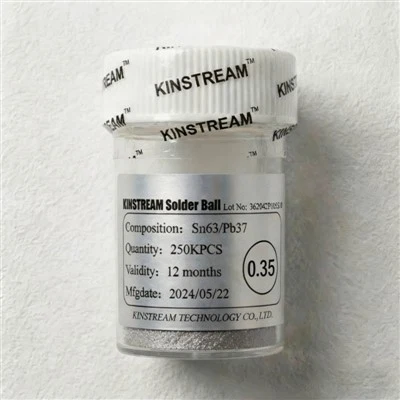

The requirements for solder ball composition vary significantly depending on the application scenario. In consumer electronics, low-temperature solder balls are the mainstream due to their low thermal stress advantage; while in the energy or military sectors, high-strength tin alloys are preferred.
Furthermore, cost-effectiveness must be considered in composition selection. For example, pure solder balls are relatively inexpensive due to readily available raw materials and simple processing; while alloy solder balls containing precious metals have higher costs due to material scarcity, but offer superior long-term performance.
Electronic Packaging and Semiconductor Manufacturing
BGA/CSP Packaging: Solder balls serve as key interconnect materials in Ball Grid Arrays (BGAs) and Chip Scale Packages (CSPs), replacing traditional pins to achieve high-density connections between chips and PCBs.
Flip Chip Bump Fabrication: Bumps are formed by attaching solder balls to chip pads for high-precision flip-chip soldering.
Wafer-Level Packaging (WLP): Solder ball placement is completed at the wafer stage, improving packaging efficiency and consistency.
Mobile phones and smart wearable devices: Micro-soldering connections for the VCM voice coil motor and image sensor in the camera module (CCM).
Soldering of precision components such as the RF antenna, fingerprint module, and battery contacts on the motherboard.
TWS earphones and smartwatches: Stress-free soldering of ultra-miniature sensors to circuit boards, adaptable to extremely small spaces.
Automotive Electronics High-Reliability Applications
New Energy Vehicle Three-Electric Systems: Soldering of PCBs and power devices in the Battery Management System (BMS) and On-Board Charger (OBC).
Intelligent Driving Hardware: Vibration-resistant and high-stability soldering of sensor modules such as millimeter-wave radar, lidar, and automotive cameras.
Medical Electronics Precision Manufacturing
Implantable Medical Devices: Flux-free solder balls are used in devices such as pacemakers and cochlear implants to ensure biocompatibility and long-term safety.
Diagnostic Equipment: Clean soldering of precision circuits in endoscopes, ultrasound probes, etc.