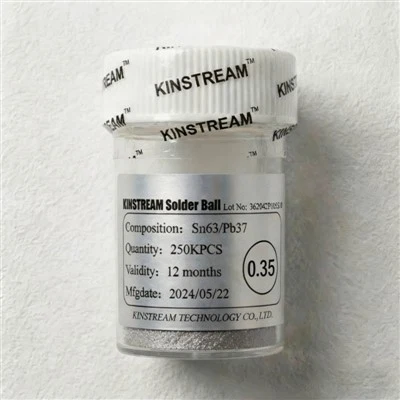

Solder solder balls are spherical engineering materials made from high-purity tin or tin alloys, primarily used in electronic packaging, semiconductor integrated circuit assembly, and chemical production. Their design originates from Taiwan, while the manufacturing process integrates technologies from Japan, Germany, and the United States. They utilize ESD anti-static packaging and customized specifications to meet diverse industrial needs.
These products feature micron-level diameter tolerances (minimum diameter 0.14mm), low oxygen content, and high conductivity, passing multiple testing standards including alloy composition and reflow performance. In the electronics field, solder balls serve as key connectors for BGA/CSP packages, replacing traditional pins to achieve high-density surface mount technology. They are compatible with PCB tin plating processes and laser welding technology. The manufacturing process encompasses ball diameter forming, optical inspection, and lead-free treatment, employing molten mold cooling forming and environmentally friendly dust removal equipment. Depending on the application, they are available in leaded and lead-free types and require reliability certifications such as automotive-grade shear testing.