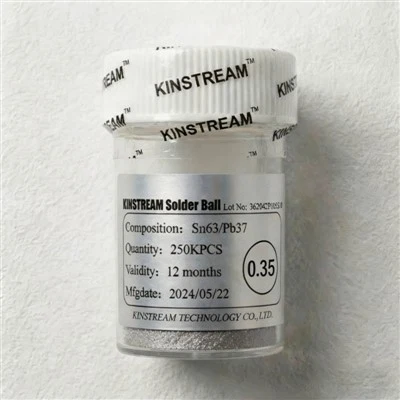

CCGA (Ceramic Pillar Grid Array) bonds are an improved structure of CBGA (Ceramic Ball Grid Array), using solder pillars instead of traditional solder balls. They are particularly suitable for large-size packages (typically larger than 32mm × 32mm) and high-reliability applications, such as aerospace, military, satellite, and high-end industrial control. Their core advantage stems from the effective mitigation of thermal mismatch stress by the bond structure.
Better Fatigue Resistance: The higher connection height of the solder pillars allows them to absorb shear stress through bending deformation during temperature cycling, significantly reducing the risk of solder joint cracking. This is particularly beneficial in mitigating the mismatch in coefficient of thermal expansion (CTE) between the ceramic substrate (CTE ≈ 7.5 ppm/℃) and the epoxy PCB (CTE ≈ 17.5 ppm/℃).
Superior Heat Dissipation: The solder pillar structure provides a more stable heat conduction path, facilitating efficient heat dissipation from the chip to the PCB and improving overall thermal management capabilities.
High Temperature, High Pressure, and Moisture Resistance: CCGA solder pillars primarily use high-lead solder (such as Pb90/Sn10, Pb80/Sn20), providing excellent resistance to environmental stresses and making them suitable for extreme temperature, high humidity, or vacuum environments.
Support for Higher I/O Density and Larger Package Sizes: Compared to CBGA, CCGA allows for finer solder pillar pitches (such as 0.5mm, 0.65mm) and higher pin counts (up to 1000+). (pins) to meet the interconnection needs of high-density chips such as FPGAs, MRAMs, and high-speed processors.