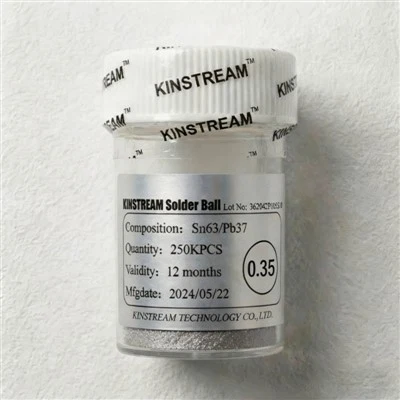

The reduction of solder ball oxidation primarily employs a BGA solder ball oxide layer removal process and a high-temperature chemical reduction method. The solder ball oxide layer is mainly tin dioxide (SnO₂), requiring a combination of physical cleaning and chemical reduction to restore metallic luster and solderability.
Cleaning and Preheating: The BGA solder balls are immersed in an ultrasonic cleaner to remove surface contaminants, followed by drying in an oven.
Soldering Reduction: Solder paste is evenly applied to the surface of the solder balls. The active ingredients in the flux are used for reflow soldering in a reflow oven to reduce the oxide layer.
Post-treatment: After reflow, ultrasonic cleaning and baking are performed again to ensure no residue remains and improve soldering quality.
Hydrogen Reduction: Under heating or high-temperature conditions, hydrogen can react with tin oxide to produce metallic tin and water. This method is suitable for laboratory or specific industrial applications.
Specialized Reducing Agents: Tin slag reducing agents are commonly used in industrial production. They reduce oxides and restore wettability through antioxidants and reducing agents (such as carbohydrates).